.png)


This is part of a series of profiles introducing students from Minerva’s incoming Fall 2025 graduate class. If you would like to learn more about our programs, please visit our website.
Being from Taiwan, Peter Wang has spent much of his professional life navigating fast-moving industries where decisions carry real consequences. With a background in business administration and marketing, Peter’s career began early on with a defining moment: a university marketing competition hosted by L’Oréal. That experience led to an internship offer and, after completing Taiwan’s mandatory military service, a full-time marketing role at the company.
Peter went on to spend nearly five years at L’Oréal before transitioning into FMCG (Fast-Moving Consumer Goods) Key Accounts Management at Reckitt Benckiser, working with hygiene and health brands such as Strepsils and Dettol. Over time, however, he felt drawn toward entrepreneurship. He identified a clear market demand and introduced a long-established Japanese brand to Taiwan as its exclusive distributor.
“People in Taiwan love Japanese products,” he explains, “but you usually have to fly there to get them.”
While Peter’s direct-to-consumer model in Taiwan flourished for years, it also taught him a hard lesson about the weight of physical goods. The constant cycle of high inventory costs and looming expiration dates was a source of persistent stress.
As Peter puts it: “Every penny I earned went straight back into more product. It felt like all my money was sitting on a shelf. That creates a lot of pressure, especially when you're racing against an expiration date.”
He later sold his business and shifted to lighter business models, founding a marketing agency and later launching an e-commerce platform during COVID to support small business owners who lacked the tools to sell online. Today, he runs his fourth company: a marketing agency focused on medical and health services, a field he sees as both impactful and scalable.
“[Right now] I focus my service on medical services or more broadly on the health industry,” he explains, noting that long-term societal trends drive his interest in the sector. “Mental health or longevity” are becoming increasingly important, he observes.
His pivot was also shaped by advice he received from an energy company owner in Taipei, which fundamentally changed how he evaluates opportunities.
“If you choose an industry which has 100 billion dollars, let’s say, and even if you just own a 1% market share, you also have a 1 billion dollar business.”
Despite his extensive experience, Peter began looking for a graduate program because he felt something was missing. Traditional MBA programs did not appeal to him. Instead, he wanted to strengthen how he made decisions.
“In the past, I just based everything on intuition and hoped it would work out,” he reflects. “Minerva attracted me because it turns blurry decisions into step-by-step processes.”
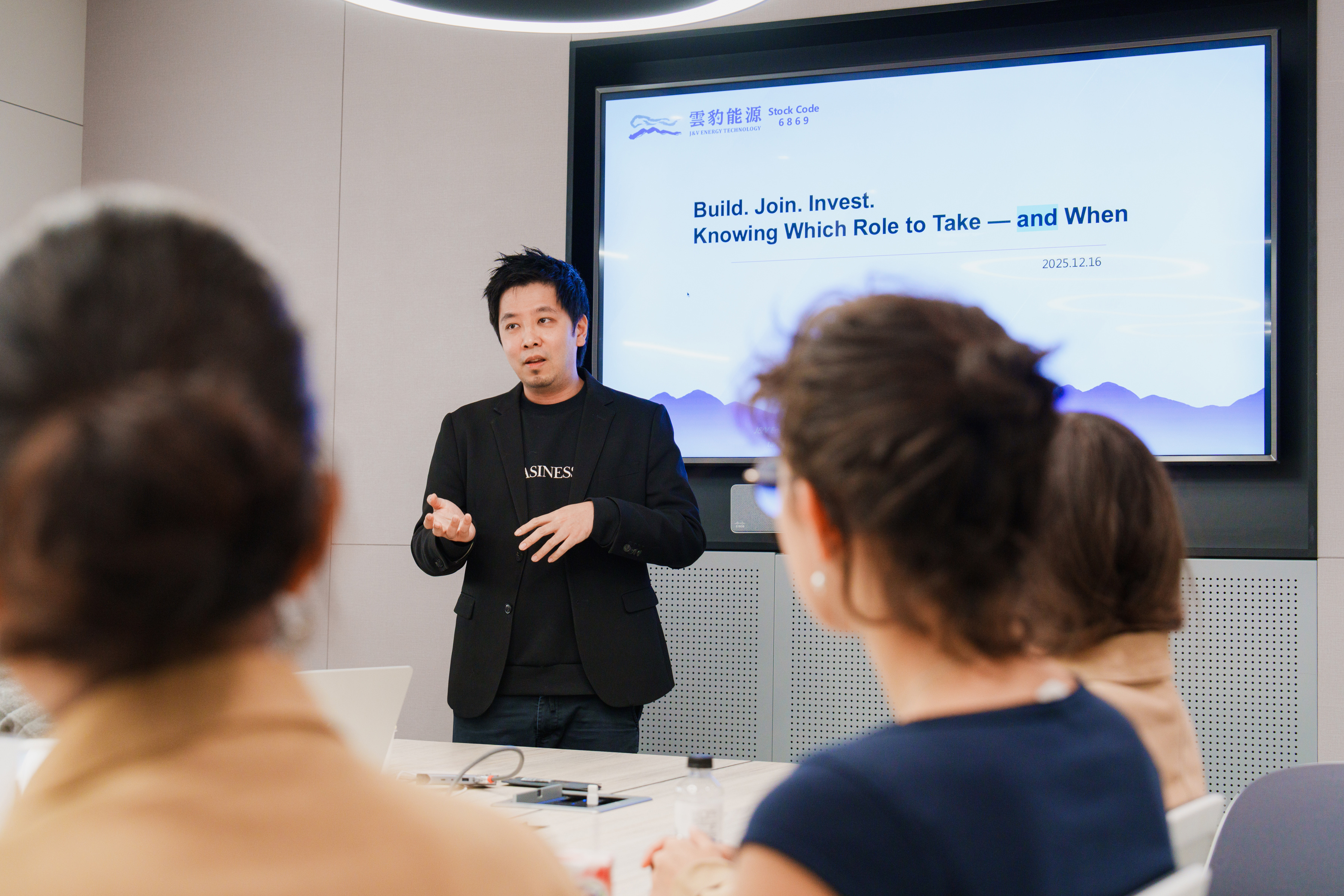
Just a few months into the Master’s in Decision Making and Applied Analytics (MDA) program, Peter has already applied Minerva’s concepts directly to his work. He restructured internal training at his company by assigning pre-work and using meetings for discussion instead of lectures.
“After that training,” he says, “all of my colleagues could explain the concepts to our clients and discuss the right approach.”
He has also brought Minerva-inspired frameworks into classrooms where he teaches business theory at incubators and colleges, noticing that his students now actively use decision-making tools rather than memorizing theory. Even statistics, a subject he once encountered in business school, has taken on new meaning.
“I think this is the peak of my statistics understanding,” he says. “That’s magical.”
Looking ahead, Peter hopes to combine his passions for entrepreneurship and education while helping expand Minerva’s recognition in Taiwan and across Asia. For him, Minerva is not just an academic program, but a way to think more clearly, teach more effectively, and make decisions with confidence in an increasingly complex world.
Quick Facts
Computational Sciences
Computational Sciences
Natural Sciences
Computational Sciences
Arts & Humanities, Natural Sciences
Social Sciences & Arts and Humanities
Business
Computational Sciences
Computational Sciences
Social Sciences & Business
Computational Sciences
Social Sciences
Computational Sciences & Business
Business & Computational Sciences
Computational Sciences
Computational Sciences
Social Sciences & Business
Business
Natural Sciences
Social Sciences
Social Sciences
Social Sciences & Business
Business & Computational Sciences
Business and Social Sciences
Social Sciences and Business
Computational Sciences & Social Sciences
Computer Science & Arts and Humanities
Business and Computational Sciences
Business and Social Sciences
Natural Sciences
Arts and Humanities
Business, Social Sciences
Business & Arts and Humanities
Computational Sciences
Natural Sciences, Computer Science
Computational Sciences
Arts & Humanities
Computational Sciences, Social Sciences
Computational Sciences
Computational Sciences
Natural Sciences, Social Sciences
Social Sciences, Natural Sciences
Data Science, Statistics
Computational Sciences
Business
Computational Sciences, Data Science
Social Sciences
Natural Sciences
Business, Natural Sciences
Business, Social Sciences
Computational Sciences
Arts & Humanities, Social Sciences
Social Sciences
Computational Sciences, Natural Sciences
Natural Sciences
Computational Sciences, Social Sciences
Business, Social Sciences
Computational Sciences
Natural Sciences, Social Sciences
Social Sciences
Arts & Humanities, Social Sciences
Arts & Humanities, Social Science
Social Sciences, Business
Arts & Humanities
Computational Sciences, Social Science
Natural Sciences, Computer Science
Computational Science, Statistic Natural Sciences
Business & Social Sciences
Sustainability
Sustainability
Natural Sciences & Sustainability
Natural Sciences
Sustainability
Computational Sciences
Computational Sciences
Computational Science & Business
Data Science and Statistics
Data Science and Statistics, Digital Practices
Earth and Environmental Systems
Cognition, Brain, and Behavior & Philosophy, Ethics, and the Law
Computational Theory and Analysis
Computer Science and Artificial Intelligence
Brand Management & Computer Science and Artificial Intelligence
Computer Science and Artificial Intelligence
Economics and Society & Strategic Finance
Enterprise Management
Economics and Society
Cells and Organisms & Brain, Cognition, and Behavior
Cognitive Science and Economics & Political Science
Applied Problem Solving & Computer Science and Artificial Intelligence
Computer Science and Artificial Intelligence & Cognition, Brain, and Behavior
Designing Societies & New Ventures
Strategic Finance & Data Science and Statistics
Brand Management and Designing Societies
Data Science & Economics
Machine Learning
Cells, Organisms, Data Science, Statistics
Arts & Literature and Historical Forces
Artificial Intelligence & Computer Science
Cells and Organisms, Mind and Emotion
Economics, Physics
Managing Operational Complexity and Strategic Finance
Global Development Studies and Brain, Cognition, and Behavior
Scalable Growth, Designing Societies
Business
Drug Discovery Research, Designing and Implementing Policies
Historical Forces, Cognition, Brain, and Behavior
Artificial Intelligence, Psychology
Designing Solutions, Data Science and Statistics
Data Science and Statistic, Theoretical Foundations of Natural Science
Strategic Finance, Politics, Government, and Society
Conversation
This is part of a series of profiles introducing students from Minerva’s incoming Fall 2025 graduate class. If you would like to learn more about our programs, please visit our website.
Being from Taiwan, Peter Wang has spent much of his professional life navigating fast-moving industries where decisions carry real consequences. With a background in business administration and marketing, Peter’s career began early on with a defining moment: a university marketing competition hosted by L’Oréal. That experience led to an internship offer and, after completing Taiwan’s mandatory military service, a full-time marketing role at the company.
Peter went on to spend nearly five years at L’Oréal before transitioning into FMCG (Fast-Moving Consumer Goods) Key Accounts Management at Reckitt Benckiser, working with hygiene and health brands such as Strepsils and Dettol. Over time, however, he felt drawn toward entrepreneurship. He identified a clear market demand and introduced a long-established Japanese brand to Taiwan as its exclusive distributor.
“People in Taiwan love Japanese products,” he explains, “but you usually have to fly there to get them.”
While Peter’s direct-to-consumer model in Taiwan flourished for years, it also taught him a hard lesson about the weight of physical goods. The constant cycle of high inventory costs and looming expiration dates was a source of persistent stress.
As Peter puts it: “Every penny I earned went straight back into more product. It felt like all my money was sitting on a shelf. That creates a lot of pressure, especially when you're racing against an expiration date.”
He later sold his business and shifted to lighter business models, founding a marketing agency and later launching an e-commerce platform during COVID to support small business owners who lacked the tools to sell online. Today, he runs his fourth company: a marketing agency focused on medical and health services, a field he sees as both impactful and scalable.
“[Right now] I focus my service on medical services or more broadly on the health industry,” he explains, noting that long-term societal trends drive his interest in the sector. “Mental health or longevity” are becoming increasingly important, he observes.
His pivot was also shaped by advice he received from an energy company owner in Taipei, which fundamentally changed how he evaluates opportunities.
“If you choose an industry which has 100 billion dollars, let’s say, and even if you just own a 1% market share, you also have a 1 billion dollar business.”
Despite his extensive experience, Peter began looking for a graduate program because he felt something was missing. Traditional MBA programs did not appeal to him. Instead, he wanted to strengthen how he made decisions.
“In the past, I just based everything on intuition and hoped it would work out,” he reflects. “Minerva attracted me because it turns blurry decisions into step-by-step processes.”
Just a few months into the Master’s in Decision Making and Applied Analytics (MDA) program, Peter has already applied Minerva’s concepts directly to his work. He restructured internal training at his company by assigning pre-work and using meetings for discussion instead of lectures.
“After that training,” he says, “all of my colleagues could explain the concepts to our clients and discuss the right approach.”
He has also brought Minerva-inspired frameworks into classrooms where he teaches business theory at incubators and colleges, noticing that his students now actively use decision-making tools rather than memorizing theory. Even statistics, a subject he once encountered in business school, has taken on new meaning.
“I think this is the peak of my statistics understanding,” he says. “That’s magical.”
Looking ahead, Peter hopes to combine his passions for entrepreneurship and education while helping expand Minerva’s recognition in Taiwan and across Asia. For him, Minerva is not just an academic program, but a way to think more clearly, teach more effectively, and make decisions with confidence in an increasingly complex world.