.png)


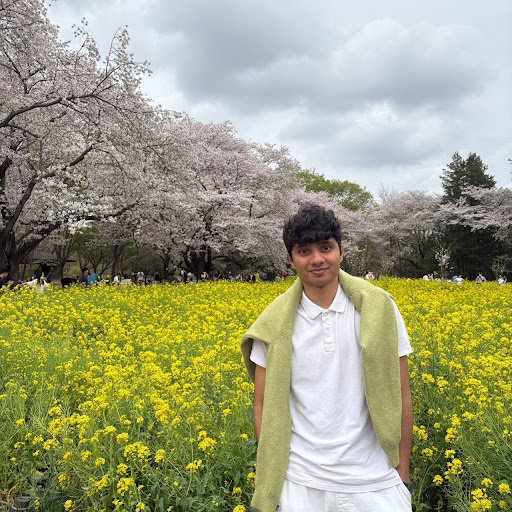
When Taher arrived at Minerva, he came with an unusual combination of interests. Drawn to both artificial intelligence and strategic finance, he kept returning to questions that neither field fully answered on its own. What does it actually take to solve an environmental problem at scale? What role can technology play, and where does it fall short? How do you build something that works not just technically, but economically and socially too?
Those questions sharpened as Taher began to see how deeply interconnected the world's systems are. Food production links to climate, climate to economics, economics to policy and behavior. The more he engaged with these connections, the more he felt that the tools he was developing through his studies had a much bigger role to play in addressing environmental challenges than was commonly recognized.
Taher describes himself as someone drawn to systems thinking, and for him, sustainability represents one of the most complex real-world systems problems that exists.
“Sustainability stopped being an abstract idea once I started seeing how interconnected everything is,” he says. “Food systems, climate, economics, even social structures. What pushed me further was realizing that with AI and data, we actually have the tools to make meaningful interventions at scale.”
At Minerva, he's pursued that conviction across disciplinary boundaries. As a double major in Computer Science and Business, his core coursework is technically rigorous, but the projects he's chosen have consistently pushed him into adjacent territory, including ethics, environmental science, policy, and behavioral psychology. That exposure, he says, has meaningfully changed how he frames problems, not just which ones he chooses to work on.
It has also reinforced his strong view that the technical and human dimensions of sustainability are not separate tracks. Engaging with one without the other tends to produce solutions that fail to gain traction in the real world.
Research, Civic Work, and Applied Experience
Taher's sustainability work spans two distinct modes of engagement, and he has been deliberate about maintaining both. On the research side, he has been developing models that use satellite imagery to assess agricultural performance over time. The project draws on infrared and reflectance data to monitor crop health and identify patterns that could inform more sustainable rotation practices. The core question driving the work is how to increase food production while reducing the strain placed on the natural systems that agriculture depends on.

What distinguishes the project, in Taher's view, is its orientation toward real-world application. The team is building toward something that could support actual decision-making, whether by farmers or by policymakers shaping agricultural incentives.
“We're essentially trying to answer a simple but powerful question,” he says. “And using satellite data to do that at scale is something I find incredibly exciting.”
In parallel, Taher has been involved with mymizu, a Japan-based initiative working to reduce single-use plastic consumption by building a refill culture nationwide. The work is community-facing and behavior-oriented, which places it in a very different register from the satellite research. Where the agricultural project is technical and data-driven, mymizu is focused on accessibility, habit change, and the conditions under which people make different daily choices.
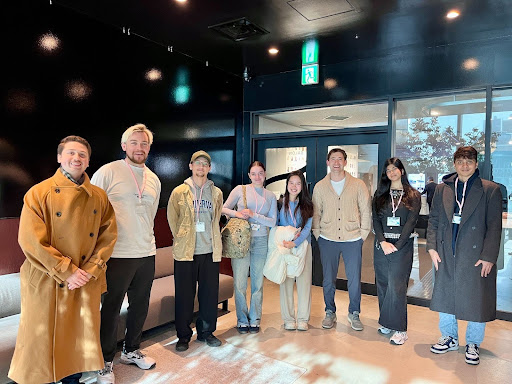
Taher sees value in holding both perspectives simultaneously. Technical precision and community-level behavior change address different parts of the same problem, and his experience moving between the two has given him a more complete picture of where meaningful impact actually comes from.
The Nippon Foundation and Institutional Perspective
Through his engagement with the Nippon Foundation, Taher has had the opportunity to observe sustainability from a more institutional vantage point. The foundation operates across a wide range of areas, including ocean health, community resilience, and technological innovation. Working within that environment gave Taher a clearer understanding of how large-scale initiatives are structured, funded, and sustained over time.
“What stood out to me is their focus on long-term, systemic impact,” he says. “Being part of that environment helped me understand how large-scale initiatives are structured and funded, and how different stakeholders need to align.”
That understanding is directly relevant to his longer-term ambitions. Taher is interested in building solutions and understanding the conditions under which those solutions can be adopted and scaled. In his view, technical innovation that isn't integrated into existing systems and institutions tends not to travel far.
Looking Ahead
Taher's longer-term goals sit at the intersection of AI, strategic finance, and environmental impact. He is interested in working at that convergence, developing approaches that are both technically grounded and financially viable, on the basis that durability and scale require both.
The satellite agriculture project remains the work he is most proud of. It draws together the strands he cares most about and holds them in productive tension: the precision of machine learning, the urgency of food and climate systems, and the challenge of building tools that move beyond the research context into actual use.
So far, his broader takeaway during his time at Minerva is that the problems most worth solving rarely fit inside a single discipline, and that building the capacity to move across fields is a form of preparation for the work ahead.
If you're looking for a university that challenges you academically while empowering you to turn ideas into impact, Minerva is where that work begins.
Quick Facts
Computational Sciences
Computational Sciences
Natural Sciences
Computational Sciences
Arts & Humanities, Natural Sciences
Social Sciences & Arts and Humanities
Business
Computational Sciences
Computational Sciences
Social Sciences & Business
Computational Sciences
Social Sciences
Computational Sciences & Business
Business & Computational Sciences
Computational Sciences
Computational Sciences
Social Sciences & Business
Business
Natural Sciences
Social Sciences
Social Sciences
Social Sciences & Business
Business & Computational Sciences
Business and Social Sciences
Social Sciences and Business
Computational Sciences & Social Sciences
Computer Science & Arts and Humanities
Business and Computational Sciences
Business and Social Sciences
Natural Sciences
Arts and Humanities
Business, Social Sciences
Business & Arts and Humanities
Computational Sciences
Natural Sciences, Computer Science
Computational Sciences
Arts & Humanities
Computational Sciences, Social Sciences
Computational Sciences
Computational Sciences
Natural Sciences, Social Sciences
Social Sciences, Natural Sciences
Data Science, Statistics
Computational Sciences
Business
Computational Sciences, Data Science
Social Sciences
Natural Sciences
Business, Natural Sciences
Business, Social Sciences
Computational Sciences
Arts & Humanities, Social Sciences
Social Sciences
Computational Sciences, Natural Sciences
Natural Sciences
Computational Sciences, Social Sciences
Business, Social Sciences
Computational Sciences
Natural Sciences, Social Sciences
Social Sciences
Arts & Humanities, Social Sciences
Arts & Humanities, Social Science
Social Sciences, Business
Arts & Humanities
Computational Sciences, Social Science
Natural Sciences, Computer Science
Computational Science, Statistic Natural Sciences
Business & Social Sciences
Sustainability
Sustainability
Natural Sciences & Sustainability
Natural Sciences
Sustainability
Computational Sciences
Computational Sciences
Computational Science & Business
Data Science and Statistics
Data Science and Statistics, Digital Practices
Earth and Environmental Systems
Cognition, Brain, and Behavior & Philosophy, Ethics, and the Law
Computational Theory and Analysis
Computer Science and Artificial Intelligence
Brand Management & Computer Science and Artificial Intelligence
Computer Science and Artificial Intelligence
Economics and Society & Strategic Finance
Enterprise Management
Economics and Society
Cells and Organisms & Brain, Cognition, and Behavior
Cognitive Science and Economics & Political Science
Applied Problem Solving & Computer Science and Artificial Intelligence
Computer Science and Artificial Intelligence & Cognition, Brain, and Behavior
Designing Societies & New Ventures
Strategic Finance & Data Science and Statistics
Brand Management and Designing Societies
Data Science & Economics
Machine Learning
Cells, Organisms, Data Science, Statistics
Arts & Literature and Historical Forces
Artificial Intelligence & Computer Science
Cells and Organisms, Mind and Emotion
Economics, Physics
Managing Operational Complexity and Strategic Finance
Global Development Studies and Brain, Cognition, and Behavior
Scalable Growth, Designing Societies
Business
Drug Discovery Research, Designing and Implementing Policies
Historical Forces, Cognition, Brain, and Behavior
Artificial Intelligence, Psychology
Designing Solutions, Data Science and Statistics
Data Science and Statistic, Theoretical Foundations of Natural Science
Strategic Finance, Politics, Government, and Society
Conversation
When Taher arrived at Minerva, he came with an unusual combination of interests. Drawn to both artificial intelligence and strategic finance, he kept returning to questions that neither field fully answered on its own. What does it actually take to solve an environmental problem at scale? What role can technology play, and where does it fall short? How do you build something that works not just technically, but economically and socially too?
Those questions sharpened as Taher began to see how deeply interconnected the world's systems are. Food production links to climate, climate to economics, economics to policy and behavior. The more he engaged with these connections, the more he felt that the tools he was developing through his studies had a much bigger role to play in addressing environmental challenges than was commonly recognized.
Taher describes himself as someone drawn to systems thinking, and for him, sustainability represents one of the most complex real-world systems problems that exists.
“Sustainability stopped being an abstract idea once I started seeing how interconnected everything is,” he says. “Food systems, climate, economics, even social structures. What pushed me further was realizing that with AI and data, we actually have the tools to make meaningful interventions at scale.”
At Minerva, he's pursued that conviction across disciplinary boundaries. As a double major in Computer Science and Business, his core coursework is technically rigorous, but the projects he's chosen have consistently pushed him into adjacent territory, including ethics, environmental science, policy, and behavioral psychology. That exposure, he says, has meaningfully changed how he frames problems, not just which ones he chooses to work on.
It has also reinforced his strong view that the technical and human dimensions of sustainability are not separate tracks. Engaging with one without the other tends to produce solutions that fail to gain traction in the real world.
Research, Civic Work, and Applied Experience
Taher's sustainability work spans two distinct modes of engagement, and he has been deliberate about maintaining both. On the research side, he has been developing models that use satellite imagery to assess agricultural performance over time. The project draws on infrared and reflectance data to monitor crop health and identify patterns that could inform more sustainable rotation practices. The core question driving the work is how to increase food production while reducing the strain placed on the natural systems that agriculture depends on.
What distinguishes the project, in Taher's view, is its orientation toward real-world application. The team is building toward something that could support actual decision-making, whether by farmers or by policymakers shaping agricultural incentives.
“We're essentially trying to answer a simple but powerful question,” he says. “And using satellite data to do that at scale is something I find incredibly exciting.”
In parallel, Taher has been involved with mymizu, a Japan-based initiative working to reduce single-use plastic consumption by building a refill culture nationwide. The work is community-facing and behavior-oriented, which places it in a very different register from the satellite research. Where the agricultural project is technical and data-driven, mymizu is focused on accessibility, habit change, and the conditions under which people make different daily choices.
Taher sees value in holding both perspectives simultaneously. Technical precision and community-level behavior change address different parts of the same problem, and his experience moving between the two has given him a more complete picture of where meaningful impact actually comes from.
The Nippon Foundation and Institutional Perspective
Through his engagement with the Nippon Foundation, Taher has had the opportunity to observe sustainability from a more institutional vantage point. The foundation operates across a wide range of areas, including ocean health, community resilience, and technological innovation. Working within that environment gave Taher a clearer understanding of how large-scale initiatives are structured, funded, and sustained over time.
“What stood out to me is their focus on long-term, systemic impact,” he says. “Being part of that environment helped me understand how large-scale initiatives are structured and funded, and how different stakeholders need to align.”
That understanding is directly relevant to his longer-term ambitions. Taher is interested in building solutions and understanding the conditions under which those solutions can be adopted and scaled. In his view, technical innovation that isn't integrated into existing systems and institutions tends not to travel far.
Looking Ahead
Taher's longer-term goals sit at the intersection of AI, strategic finance, and environmental impact. He is interested in working at that convergence, developing approaches that are both technically grounded and financially viable, on the basis that durability and scale require both.
The satellite agriculture project remains the work he is most proud of. It draws together the strands he cares most about and holds them in productive tension: the precision of machine learning, the urgency of food and climate systems, and the challenge of building tools that move beyond the research context into actual use.
So far, his broader takeaway during his time at Minerva is that the problems most worth solving rarely fit inside a single discipline, and that building the capacity to move across fields is a form of preparation for the work ahead.
If you're looking for a university that challenges you academically while empowering you to turn ideas into impact, Minerva is where that work begins.